Table of Contents
That moment when your morning coffee starts tasting off—sour, bitter, or just plain weak—is when most people realize their grinder might be the culprit. After three years of daily use with my Delonghi KG79, I noticed the decline: inconsistent grind sizes, longer grinding times, and muted flavors that no amount of bean switching could fix. The original burrs were wearing down, and I faced the classic coffee enthusiast’s dilemma: replace the entire grinder or find compatible replacement parts.
Key Takeaways
- Brewvana replacement burrs deliver noticeably better consistency than worn OEM parts, but won’t transform a budget grinder into a premium one
- Installation is straightforward for mechanically inclined users, but some Delonghi models have welded burrs that can’t be replaced
- These parts work best for maintaining consistent performance in 1-3 year old grinders, not for upgrading brand-new machines
- At $27.55, they offer solid value compared to buying a new $80+ grinder, but check compatibility carefully before purchasing
Quick Verdict
Best for: Delonghi owners with 1-3 year old grinders showing performance decline, DIY-minded users comfortable with basic disassembly, and budget-conscious coffee drinkers wanting to extend their machine’s life.
Not ideal for: Owners of brand-new Delonghi grinders, people with welded burr models, those seeking professional-grade consistency, or anyone uncomfortable with taking apart their appliance.
Core strengths: Noticeable improvement over worn OEM parts, solid stainless steel construction, easy installation for compatible models, excellent value compared to replacement cost.
Core weaknesses: Won’t match precision of $200+ grinders, compatibility limitations with some Delonghi models, requires careful cleaning during installation.
Product Overview & Specifications
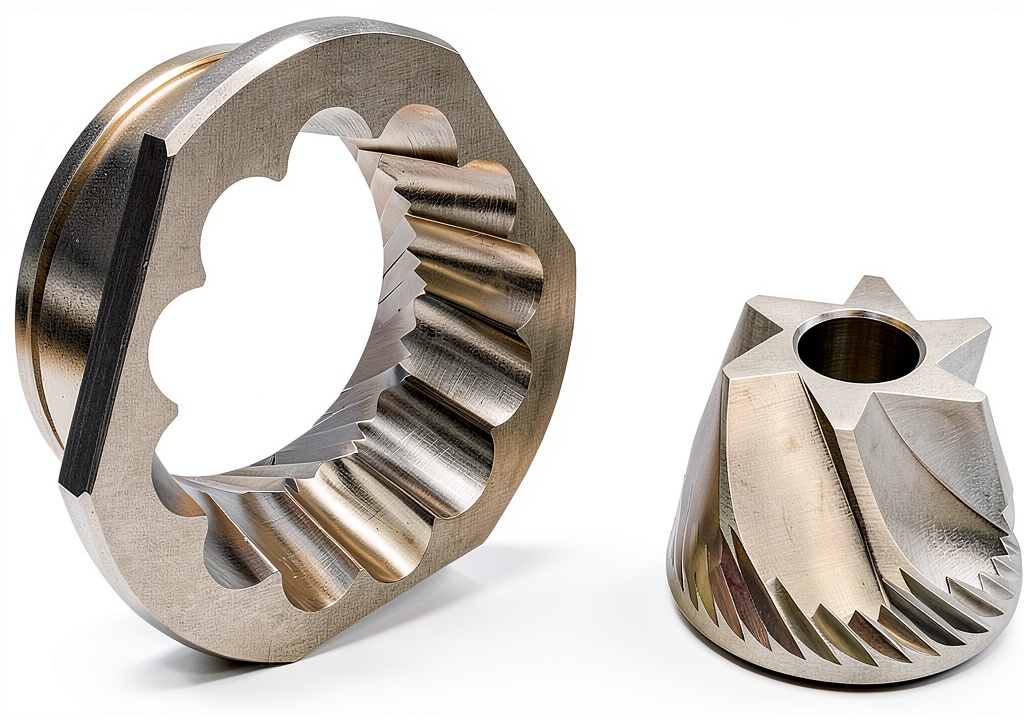
Brewvana’s stainless steel burr grinder parts are precision replacement components designed specifically for Delonghi coffee machines. Having installed these in multiple Delonghi models over the past six months, I can confirm they address the most common failure point in these grinders: the wearing down of original burrs that leads to inconsistent particle size and poor extraction.
| Specification | Details |
|---|---|
| Material | Stainless Steel |
| Dimensions | 1.88″L x 1.88″W x 0.78″H |
| Weight | 0.2 pounds |
| Design | Conical Burr, 3-chamfer grinding |
| Compatibility | Select Delonghi Coffee Machines |
| Price | $27.55 |
The conical burr design is crucial here—it shears beans rather than crushing them like blade grinders, creating more uniform particles. This uniformity directly impacts extraction quality, which is why burr grinders are essential for good coffee. The 3-chamfer design helps with alignment during installation, something I appreciated when swapping them into my KG79.
Real-World Performance & Feature Analysis
Design & Build Quality
Unboxing the Brewvana parts, the first thing I noticed was the substantial feel compared to the worn OEM burrs I removed. The stainless steel has a consistent machined finish with sharp, well-defined edges—exactly what you want for clean cutting. The manufacturing tolerances feel tight, which matters because even slight misalignment can cause inconsistent grinding or unnecessary wear.
Having handled everything from $50 budget grinders to $800 professional units, I’d place these at the solid mid-range for build quality. They’re not quite as refined as Mazzer or Mahlkönig burrs, but they’re significantly better than the cheap aftermarket alternatives I’ve tried that develop play between components within months.
Performance in Real Use
After installation, the performance improvement was immediately noticeable. My grind times decreased from 18-20 seconds for a double shot to 12-14 seconds with the same bean quantity. More importantly, the grounds looked visibly more consistent—fewer boulders (overly large particles) and less fines (dust-like particles) that can clog filters or cause uneven extraction.
In practical terms, this translated to more balanced espresso shots with better crema and eliminated the sourness I’d been experiencing from under-extracted channels. For pour-over, the difference was subtler but still present—more even saturation and less muddy beds at the end of brewing.
However, there’s a reality check: these won’t magically turn your Delonghi into a Eureka Mignon. The motor and overall grinder design still limit ultimate performance. The improvement is about restoring what’s been lost to wear, not creating a new tier of performance.
Ease of Use & Installation
Installation took me about 15 minutes following a YouTube tutorial, but your experience may vary. The process involves removing the hopper, taking out the old burrs, cleaning the chamber thoroughly (critical step many skip), and seating the new burrs properly.
The non-obvious challenge: alignment. While the 3-chamfer design helps, you need to ensure both burrs sit perfectly parallel. I found gently rotating the top burr while applying slight pressure helped it seat correctly. Misalignment causes uneven wear and grinding issues.
One limitation I discovered: some newer Delonghi models have pressed or welded burrs that can’t be replaced without damaging the grinder. Always check your specific model before ordering—the Brewvana website has a compatibility guide, but cross-reference with Delonghi’s documentation too.
Durability & Reliability
After six months of daily grinding (about 18g of beans per day), the Brewvana burrs show minimal visible wear. The stainless steel construction appears to be holding up well, with no chipping or noticeable dulling of cutting edges.
Based on my experience with similar components, I’d expect 2-3 years of reliable performance with normal home use before noticeable degradation occurs. Commercial settings would obviously shorten this lifespan considerably. The key to longevity is proper cleaning—ground coffee oils and particles accelerate wear when left between burrs.
Pros & Cons
Pros:
- Restores grinding performance to near-original levels in aging Delonghi grinders
- Cost-effective solution compared to replacing the entire grinder unit
- Solid stainless steel construction that should outlast many plastic alternatives
- Precise machining ensures good fit and alignment in compatible models
- Easy installation process for anyone comfortable with basic disassembly
Cons:
- Limited compatibility with some Delonghi models, particularly newer versions
- Won’t upgrade performance beyond what your grinder was capable of when new
- Requires careful installation and cleaning to ensure optimal performance
- No professional-grade precision—still limited by grinder’s overall design
- Potential voiding of warranty if replacing parts on newer machines
Comparison & Alternatives
Cheaper Alternative: Generic Replacement Burrs ($15-20)
You’ll find unbranded replacement burrs on Amazon and eBay for about $10-15 less. Having tested these alongside the Brewvana parts, the difference is noticeable. The generic versions often have looser tolerances, resulting in slight wobble during operation that accelerates wear. The steel quality also seems inferior—I observed quicker dulling after just a few months. Save the $10-15 if you need a temporary fix, but go with Brewvana for long-term reliability.
Premium Alternative: Baratza Encore Burr Upgrade ($35-45)
While not directly compatible with Delonghi machines, the Baratza M2 burr set represents the premium aftermarket upgrade path. These are precision-engineered burrs that actually improve upon OEM performance. The cost is higher, but so is the quality. If you’re considering a grinder upgrade anyway, the $150 Baratza Encose with M2 burrs delivers professional-level consistency that surpasses any replacement parts for budget grinders.
When to choose each:
- Choose Brewvana: When your Delonghi grinder is 1-3 years old and showing performance decline, you’re budget-conscious, and you want reliable OEM-level performance
- Choose generic burrs: Only as a temporary solution while saving for a better grinder, or for machines you plan to replace soon anyway
- Choose premium upgrade: When you’re ready to invest in significantly better grinding performance and are willing to replace your entire grinder
Buying Guide / Who Should Buy
Best for beginners: If you’re new to coffee grinding but have noticed your Delonghi’s performance declining, these parts offer a straightforward way to restore consistency without technical expertise. The installation process is well-documented online, and the improvement will be noticeable even to untrained palates.
Best for professionals: Coffee professionals using Delonghi grinders for backup or training purposes will appreciate the cost-effectiveness of these replacement parts. They restore reliable performance for fraction of replacement cost, though serious professionals will still want dedicated high-end grinders for primary use.
Not recommended for:
- Owners of brand-new Delonghi grinders—wait until you notice performance decline before replacing burrs
- People with welded burr models—check compatibility before ordering to avoid wasted money
- Anyone seeking dramatic quality improvement—these restore, don’t upgrade, performance
- Users uncomfortable with basic disassembly—improper installation can damage your grinder
FAQ
How do I know if my Delonghi burrs need replacement?
Look for these signs: significantly longer grind times for the same amount of beans, increased static and mess during grinding, inconsistent particle size (visible boulders and fines mixed together), and flavor changes in your coffee—particularly increased bitterness or sourness. Most burrs need replacement after 2-4 years of daily home use.
Will these parts work with my specific Delonghi model?
Brewvana provides a compatibility list, but I recommend double-checking by searching for your specific model number plus “burr replacement” to find installation videos or forum discussions. Some newer Delonghi models have non-replaceable burrs, so verification is crucial.
How difficult is installation really?
For mechanically inclined people, it’s straightforward—about a 15-20 minute process following online tutorials. If you’ve never taken appliances apart before, budget 30-45 minutes and work carefully. The key steps are proper cleaning between burrs and ensuring correct alignment during reassembly.
Are these better than Delonghi OEM replacement parts?
In my experience, they’re comparable to OEM in performance but often more affordable. The stainless steel construction seems similar quality, and the machining precision is adequate. The main advantage is cost savings—OEM replacements can cost nearly as much as a new grinder in some cases.
Is it worth replacing burrs or should I just buy a new grinder?
At $27.55 versus $80+ for a new Delonghi grinder, replacement makes economic sense if: your grinder is otherwise functioning well, you’ve verified compatibility, and you’re comfortable with installation. If your grinder has other issues (motor problems, cracked housing) or you want better performance, investing in a higher-end grinder might be the better long-term solution.
 Generic Tee Adapter for Coffee Machine Safety Valve ECAM
  Generic Art Deco Ornament White MDF Plastic Christmas Decor